The Walled Garden Set · five PDFs, 86 pagesThe Walled Garden Set Get the set, $27
AI-generated illustration

The Crop House · The Walled Garden Set

Before you buy plants, bags and seed packets again, find out which ones you actually need.

Cover of Guide One, The Plant-Once Bed. Cover of Guide Two, The Bag You Never Buy. Cover of Guide Three, The Seed You Keep. Cover of the bonus guide, The Kitchen End. Cover of the bonus, The Potting-Shed Cards.

3 guides + 2 bonuses · 5 PDFs · 86 pages

The Walled Garden Set is three guides and two bonuses on the plants, the bags and the seed packets: what to plant once, what to use instead of the bag, which seeds to keep, and which to keep buying without shame. Every number names its source: a university extension service, the USDA, or the vendor’s own 2026 price page.

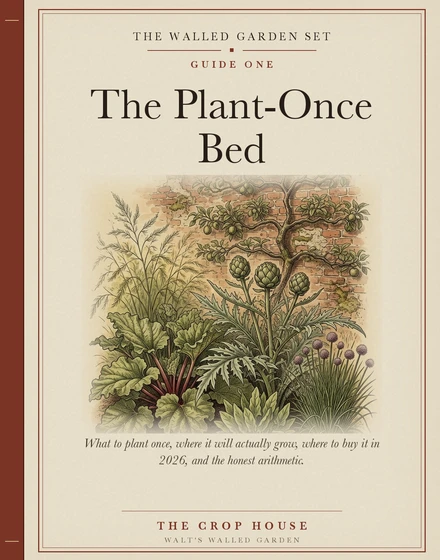
  • IThe Plant-Once Bed
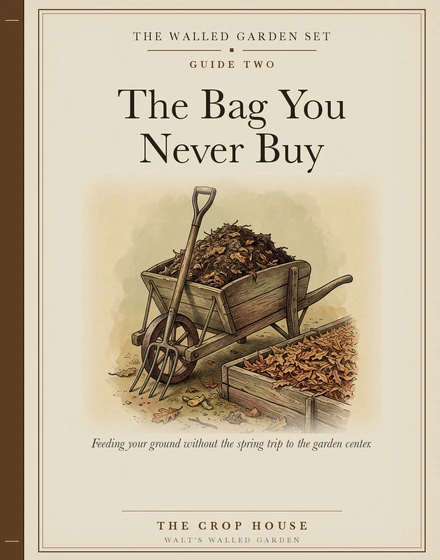
  • IIThe Bag You Never Buy
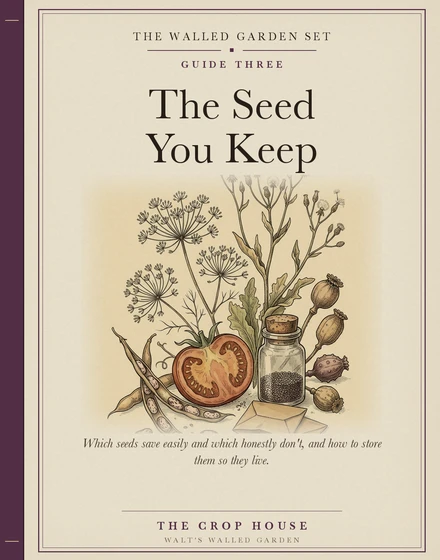
  • IIIThe Seed You Keep
$27One payment. Five PDFs, 86 pages.
Get the set, $27
7-day refund, keep the file Secure checkout on Gumroad
See real pages first

Vendor prices checked on the vendors’ own pages in September 2026 · every future edition free to owners

The yearly re-buy

Every spring the garden sends you back for the same three things.

The plants that never suited your ground, the bags of compost and manure, the seed packets for crops you could have kept: a lot of advice says “never buy again.” This set goes line by line and tells you which of them you can cover at home, how, and where it honestly doesn’t work.

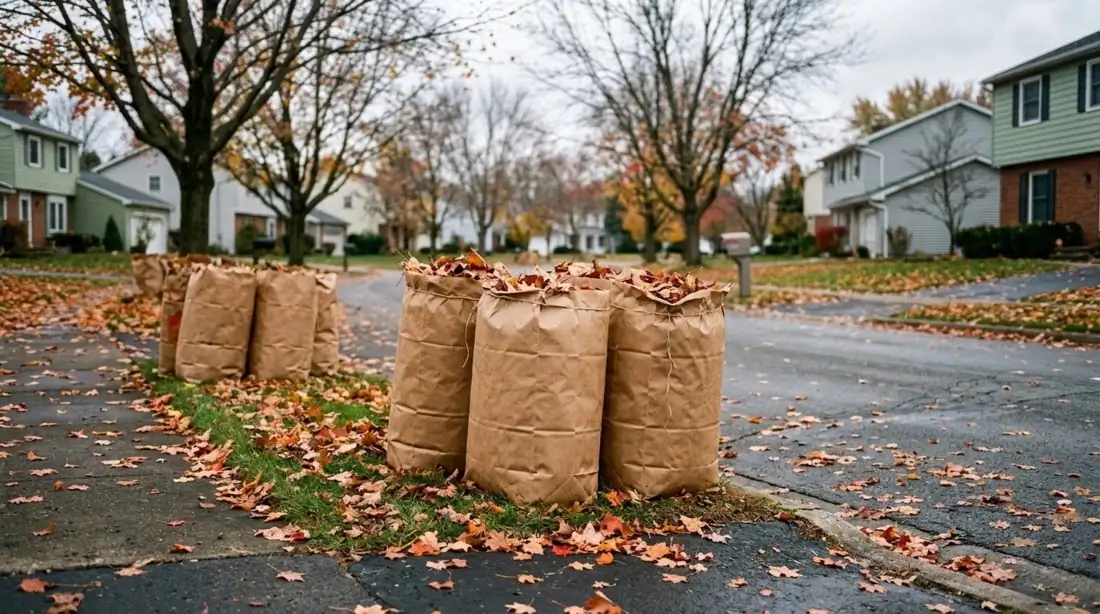
Brown paper yard-waste bags full of autumn leaves lined up at the curb of a suburban street in October.AI-generated illustration
Every October the leaves go to the curb in paper bags. Guide Two starts there: two to three inches of shredded leaves on the beds, the rest into a leaf-mould pile.

The plantsGuide One · The Plant-Once Bed · 28 pages

Fourteen perennials, each with its zone range, its first real harvest, how many good years it gives, and a “skip it if…” line. Then where to order each one in 2026 and when, because crowns ship in spring and the spring stock sells out by late winter.Chapters 1–7 · the master table is on pp. 7–8

The bagsGuide Two · The Bag You Never Buy · 19 pages

Leaves, leaf mould, wood ash, grass clippings and compost, each with its rate and its season from extension research, and the bean test you run before any free load of manure, hay or straw touches a bed.Chapters 1–6 · the bean test opens Chapter 2, p. 8

The seed packetsGuide Three · The Seed You Keep · 15 pages

Which crops save easily, which need one rule, and which to keep buying. How far apart, how to dry and store, how long each seed lives, and one plain page on what the law says, in the USDA’s own words.Chapters 1–5 · the law page is Chapter 5, p. 13

“Nothing in here is ‘harvest forever.’ Perennial means the plant comes back. It does not mean the plant never tires.”

Guide One, p. 3

The garden year

Problem by problem, season by season.

The set follows the year the way the nurseries and the leaves run it. Here is what goes wrong in each season, what the guides say to do, and the page where it’s printed.

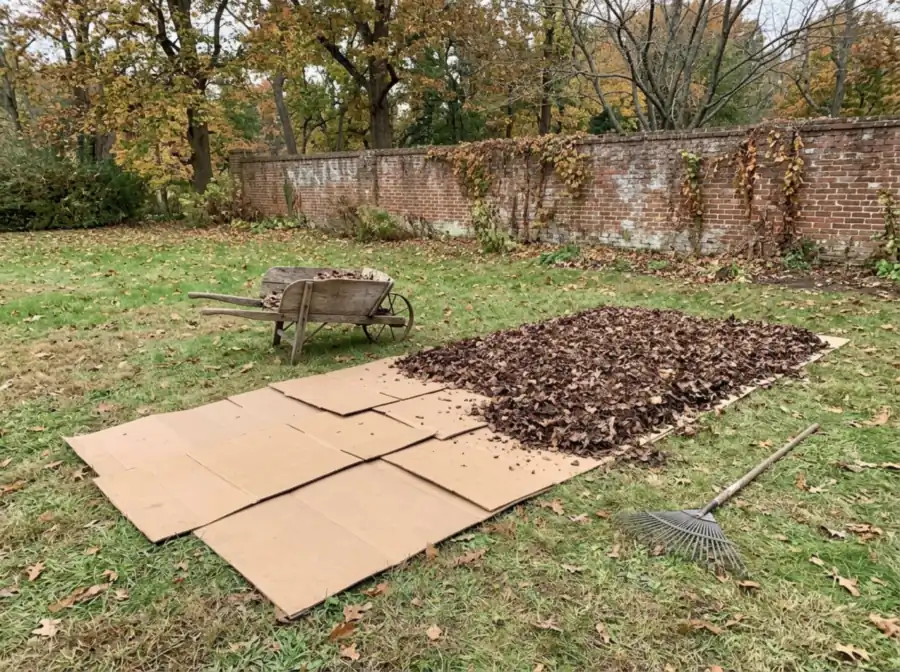
Overlapping sheets of plain brown cardboard laid on a lawn, half covered with shredded leaves, a rake and a wheelbarrow nearby.FallAI-generated illustration

Fall · September to November

The new bed belongs where the lawn is, and the leaves are already at the curb.

The problem

You want a permanent bed on grass, and most of what you’d plant in it won’t ship until spring.

What the set says

Cardboard goes down in October, seams overlapped six inches, four to six inches of leaves on top, then leave it until March. Seed garlic and walking-onion topsets ship only in the fall, so that half of the bed goes in at the same time.

Guide One, Ch. 2 & 6 · Guide Two, Ch. 1 & 5 · Card 2
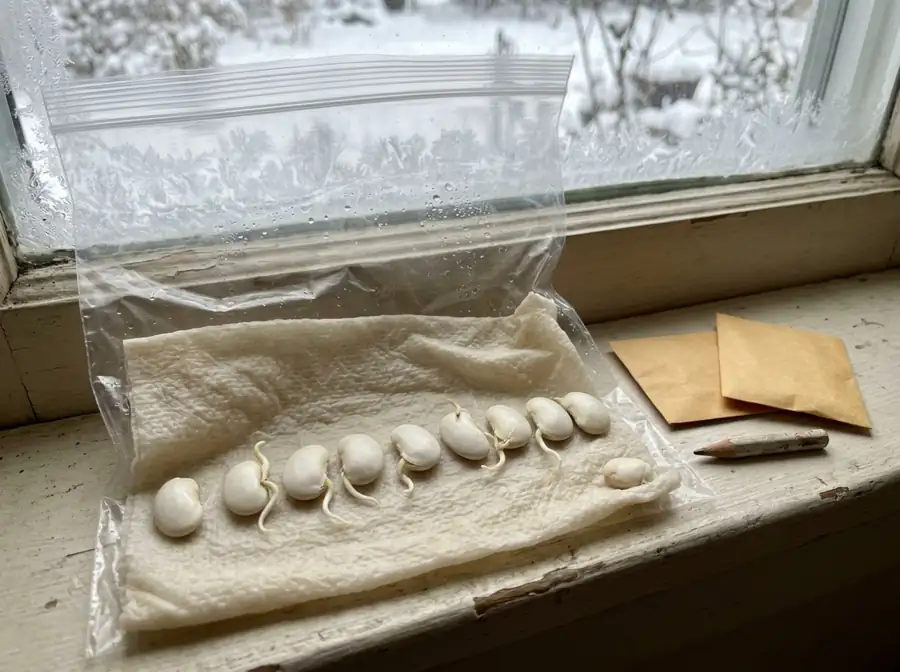
Bean seeds sprouting on a damp paper towel inside a clear plastic bag on a frosty February windowsill.WinterAI-generated illustration

Winter · January and February

Everything you wanted says “sold out,” and last year’s seed may be dead.

The problem

Asparagus and rhubarb crowns show sold out in the fall, and there’s a drawer of old seed packets nobody has tested.

What the set says

“Sold out” in the wrong season is the calendar: dormant crowns ship in spring and are ordered in January. In February, ten seeds on a damp towel settle each old packet: ten up, sow as normal; seven to nine, sow thicker; six or fewer, replace it.

Guide One, Ch. 6 · Guide Three, Ch. 4 · Card 6
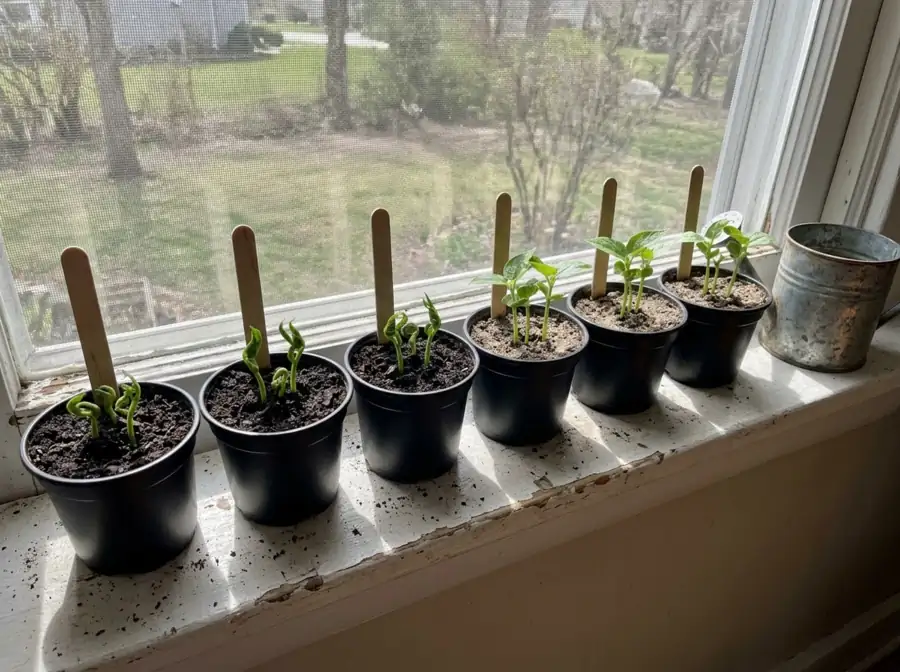
Six small pots of young bean seedlings in a row on a sunny windowsill, with plain wooden markers.SpringAI-generated illustration

Spring · March to May

A free load of manure that curls your tomatoes for years.

The problem

Some pasture herbicides survive the cow, the manure pile and the compost. Oregon State puts crop damage as low as one part per billion, and tomatoes, beans and peppers are among the plants it hits.

What the set says

Run the bean test before anything free touches a bed: six small pots, a few bean seeds and two to three weeks. Twisted new leaves against clean controls mean you don’t spread it. The four steps are printed further down this page.

Guide Two, Ch. 2 · Card 3See the four steps
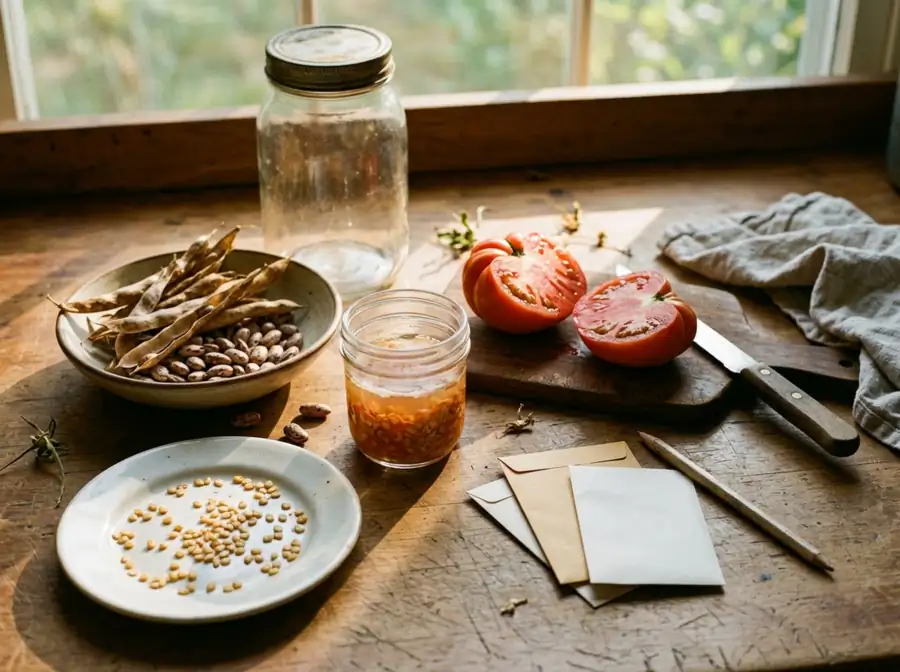
Tomato seeds fermenting in a small jar, seeds drying on a plate, dry bean pods and plain envelopes on a kitchen counter.SummerAI-generated illustration

Summer · June to August

Next February’s seed order is growing in the bed right now.

The problem

Some crops cross with the neighbor’s garden, or with the Queen Anne’s lace on the roadside, and the saved seed comes up wrong.

What the set says

Keep the easy shelf: let one lettuce bolt, let bean pods dry on the plant, ferment tomato seed two to four days. Store by Harrington’s rule: °F plus humidity % should not pass 100. Buy the hard shelf without shame.

Guide Three, Ch. 1–3 · Card 5

Straight verdicts

It tells you what to skip, too.

A guide that only says yes sells you dead crowns. Every seed in Guide Three lands on one of three shelves, and the other guides say no where no is the answer.

Save it easily

Beans, peas, lettuce, tomatoes. They pollinate themselves, and ten feet between varieties is enough at home.

Guide Three, Ch. 1

Save it with one rule

Peppers, squash, cucumbers, melons. One variety per species a year, or a mesh bag, or ten minutes of hand-pollinating.

Guide Three, Ch. 1–2

Buy it, no shame

Corn, spinach, beets, chard, the cabbage family, carrots, onions. Wind, crowds or a second season make home seed a poor trade.

Guide Three, Ch. 1

Three plants Guide One talks you out of: ramps, perennial leeks, and scorzonera grown as a perennial, each with the reason.

Guide Two’s last chapter is “What This Will NOT Do”: fix compaction from the top, replace lime on acid ground, or feed heavy feeders in year one.

Guide One, pages 7–8

Fourteen plants, your zone, and a straight answer.

This is the master table from Guide One, typed out here so you can read it on a phone. Find your zone, find your ground, and read the last column before you spend a dollar.

The master table from Guide One: plant, zones, first real harvest, and when to skip it.
PlantZonesFirst real harvestSkip it if…
Asparagus3–8*light yr 2, full yr 3–4you need food this year, or the ground sits wet
Rhubarb4–7year 3zone 8+ — it will not persist
Horseradish2–9year 1, after frostyou won’t dig every root each fall
Walking onion3–10greens yr 1, topsets yr 2you want a tidy, fixed bed
Sorrel4–9this seasonyou have kidney-stone history (oxalates)
Chives4–8this seasonyou’d leave the flowers on AND want no volunteers
Sea kale5–9thongs yr 2, seed yr 3your soil is acid, heavy or wet
Skirret~4–9*small yr 1, real yr 2you can’t keep it watered, or hate fiddly roots
Lovage4–9leaves yr 1your bed is small — it becomes a 5-ft clump
Good King Henry4–8*year 2you expect it to taste like spinach
Tree collards~7–10*year 1you’re colder than zone 7 with no backup cutting indoors
Sunchoke3–8this fallyou can’t give it a permanent, fully-dug bed
Globe artichokeperennial 7+; annual 5–7perennial yr 2; annual yr 1zone 6 or colder without serious mulch — grow it as an annual
Welsh onionvery hardy*this seasonyour bed sits wet in winter

Zones marked * are a composite where no university publishes a range; the guide says so at each plant. The printed table also gives the ground, the good years and how each one spreads.

Get the set, $27

Takes you to what’s included and the checkout button.

The honest arithmetic

The video called it the $85 bed. The guide rechecked every line.

On the channel, the perennial bed was “the $85 bed.” Guide One prices it again, item by item, against the mail-order catalogs as of September 2026, and prints the correction in its own table: “$85 is the floor, not the middle.”

What the video said$85
Rechecked, Sept. 2026$75–120

About $77 if you catch two sales and buy a half pound of garlic, up to about $119 at plain list prices, before shipping. Your local nursery may beat several of the lines.

Costly mistake, Guide One, p. 11

Paying extra for 2- and 3-year “head start” asparagus crowns. They sulk a season from transplant shock; by year four you can’t tell them from the cheap 1-year crowns. Same wait, more money.

Page 12, as printed. The table names the vendors and their prices (Jung, Burpee, Fedco, Nichols and others). Prices drift, and the guide says when each one was checked.

Read this before you accept anything free

The bean test: twenty minutes of work, three weeks of patience.

A family of pasture herbicides (aminopyralid, clopyralid and picloram) stays active after being eaten by a cow, excreted and composted, as Tennessee’s extension puts it. Oregon State puts crop damage at concentrations as low as one part per billion. So before any free load of manure, hay, straw or clippings touches a bed, Guide Two has it take this test.

  1. Six small pots

    Manure or compost: fill three with a 1:1 mix of the suspect material and bagged potting mix. Hay, straw or clippings: fill them with potting mix and lay a thick mat of the material on top.

    Fill three more with plain potting mix. Those are your controls.

  2. Three bean or pea seeds in each

    Water, a sunny window, keep them moist.

  3. Wait two to three weeks

    Until the seedlings carry three sets of true leaves. Nothing clear yet? Give it four weeks before you call it clean.

  4. Read the new growth

    Flat, open leaves in both: pass. Cupped, curled, twisted leaves against clean controls: don’t spread it, and don’t try to compost it clean. Then run it again on every new load: “Beans are cheap. Beds aren’t.”

Card 3, printableThe same test on one page for the shed wall, with the three questions to ask whoever offers you the load.

The protocol is North Carolina State Extension’s, cross-checked in the guide against Washington State and Tennessee. Guide Two, Chapter 2, also covers what to do if a load fails and the four questions to ask before you take free material.

Look inside

Real pages from the PDFs.

Nothing here is a mockup. Tap any page to read it full size.

What to skipGuide One, p. 27
What it will not doGuide Two, p. 17
The ten-seed testGuide Three, p. 12
What the law saysGuide Three, p. 13
The eating halfThe Kitchen End, p. 4
Buying calendar cardThe Potting-Shed Cards
Rates & depths cardThe Potting-Shed Cards
Zone & ground cardThe Potting-Shed Cards
Get the set, $27

Takes you to what’s included and the checkout button.

Where it came from

Built from the questions under the videos.

These are real comments from the channel, with their likes when we collected them in August 2026. Quoted as written, with one typo fixed; “…” marks a cut.

“What would also be nice is the information about where can we get them now if we want to grow them?”

24 likes · the channel’s most-watched video, on perennial crops

Answered inGuide One: named nurseries with their 2026 prices, and the month to order each plant.

“I want to plant asparagus and rhubarb first. I’m not sure rhubarb will grow in my region…”

9 likes

Answered inGuide One, Ch. 1: rhubarb is zones 4–7 (Ohio State). In zone 8 and warmer it won’t persist.

“Sure it works if you can be sure the straw is not contaminated with herbicides.”

3 likes

Answered inGuide Two, Ch. 2: the bean test, and the four questions to ask before you take it.

“In the land of slugs, hay and straw is a disaster”

8 likes

Answered inGuide Two, Ch. 4: mulch late, switch to leaf mould on damp ground, bait twice a year with iron phosphate.

No buyer reviews are shown here yet, because we won’t make any up.

Fit check

Who this is for, and who should skip it.

It’s for you if

  • You garden in the US, in beds or in the ground, and you’re tired of buying the same plants, bags and packets every spring.
  • You’d rather read a university’s number than a slogan.
  • Neighbors offer you free manure, straw or clippings, and you want to know it’s safe first.
  • You want to know which old perennials are worth the ground, and which aren’t.

What it is not

  • Not a “never buy again” promise. Guide Three names the seed to keep buying, and Guide Two ends with what the free system won’t do.
  • Not advice for your exact yard. Zones, soil and prices vary. The guides show you how to check, and your county extension office is the referee.
  • Not a printed book. Five PDFs to read on a tablet or computer, or print at home.
  • Not legal advice. The seed-law chapter is one plain page built on the USDA’s own FAQ.
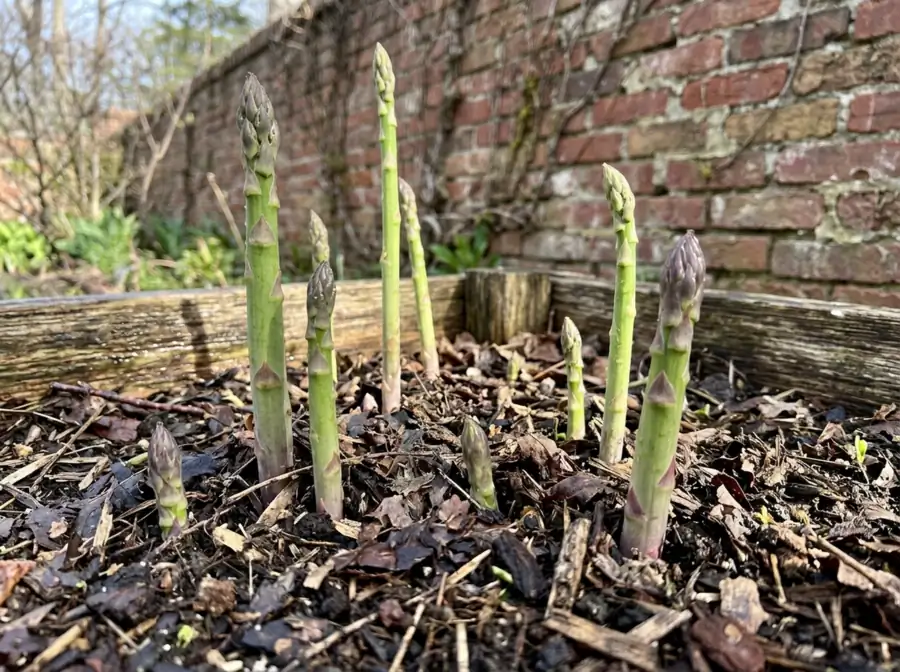
Thick asparagus spears coming up through leaf mulch in a raised bed in early spring, a brick wall behind.AI-generated illustration
What patience looks like in numbers.Asparagus gives nothing in year one, a light two-week cut in year two, four weeks in year three, six in year four, and a full eight from year five. That’s the University of Illinois schedule, printed in Guide One, Chapter 2, next to the cost of the crowns.
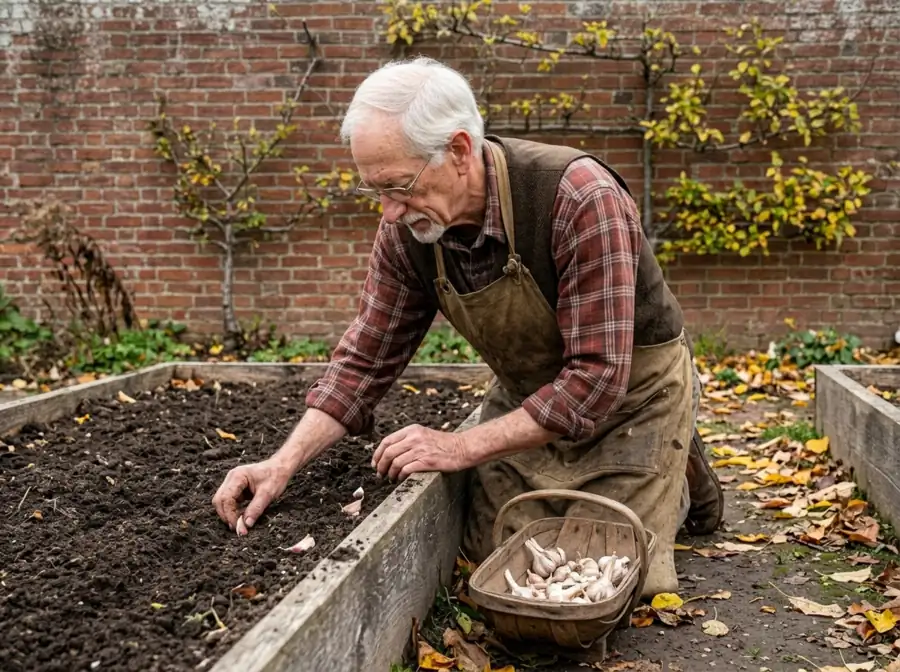
AI-generated illustration of Walt, the channel's character, planting garlic cloves in a raised bed in October, a brick wall behind him.AI-generated illustration

Who’s talking

Written in Walt’s voice. Built on sources.

The guides are written in the voice of Walt, the character who narrates The Crop House on YouTube. Walt is not a real person, and his pictures are AI-generated illustrations. He claims no credentials: every number in the set names its source, so you can check it against your own county extension office.

More than 6,500 people subscribe to the channel. The questions in their comments decided what went into the set.

Where the numbers come from

Rates, depths, zones and harvest years come from university extension services, named sentence by sentence; where only grower experience exists, the guide says so, and where the authorities disagree it shows both. Plant and seed prices were checked on each vendor’s own page in September 2026. The seed-law page rests on the USDA Plant Variety Protection Office’s FAQ. These are the 27 universities named in the source notes:

IllinoisNC StateOregon StatePenn StateCornellIowa StateWisconsinOhio StateMarylandClemsonPurdueUtah StateNDSUHawaiiWashington StateTennesseeGeorgiaNew HampshireMinnesotaColorado StateRutgersDelawareSaskatchewanUMassMichigan StateSouth Dakota StateAlaska-Fairbanks

Contents

All five volumes, chapter by chapter.

Guide One · The Plant-Once Bed

28 pages · 7 chapters. Perennials: where they grow, what they cost in 2026, when to order, what to skip.

  • 1Three Questions Before You Spend a Dollar · the master tablep. 5
  • 2The Bed Itself (and What It Really Costs in 2026)p. 9
  • 3The Core Five · asparagus, rhubarb, horseradish, walking onion, sorrel and chivesp. 13
  • 4The Old-Country Four · sea kale, skirret, lovage, Good King Henryp. 18
  • 5Two in a Box, Two in a Line · sunchoke, artichoke, Welsh onion, tree collardsp. 22
  • 6The Buying Calendarp. 25
  • 7What I’d Skip, and Whyp. 27

Guide Two · The Bag You Never Buy

19 pages · 6 chapters. Feeding the ground with leaves, ash and compost, at extension rates, and the bean test.

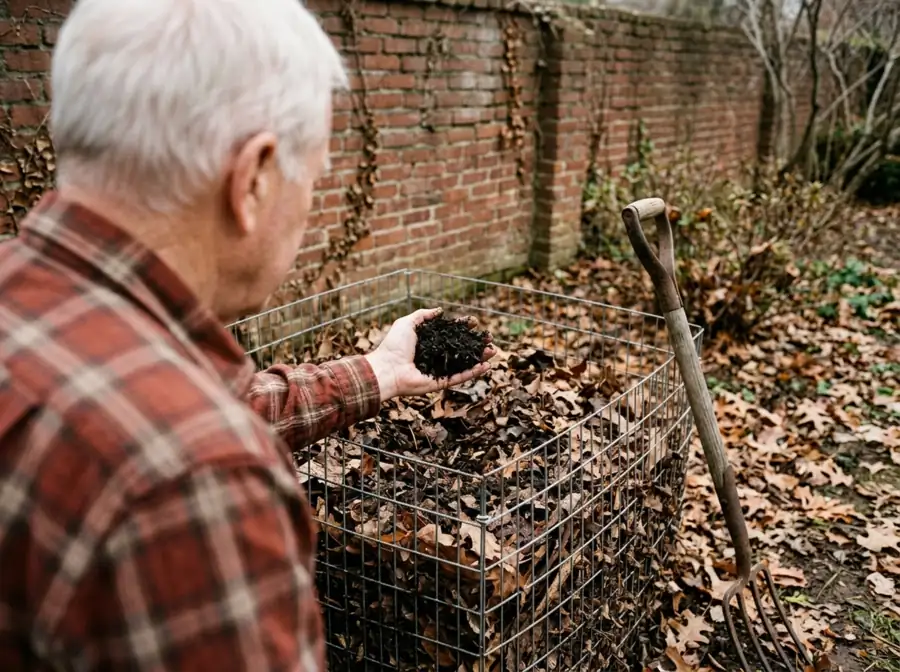
AI-generated illustration of an older gardener, seen from behind, holding a handful of dark, crumbly leaf mould over a wire bin of rotted leaves.AI-generated illustration

Shredded leaves, kept damp and turned when you think of it, become leaf mould in six to twelve months (Penn State’s timeline). Whole leaves in a dry pile take two or three years. Chapter 5 puts every material on one calendar: what goes down, how thick, and when.

  • 1The Free Bag Falling Off the Trees · leaves and leaf mould, with ratesp. 5
  • 2The Contamination Trap (read this before you accept anything free) · the bean testp. 8
  • 3Wood Ash: the Fireplace Dividend, Measuredp. 12
  • 4Slugs, Wet Ground, and the Honest Limits of Mulchp. 13
  • 5The Working Year: What Goes Down, How Thick, and Whenp. 14
  • 6What This Will NOT Dop. 17

Guide Three · The Seed You Keep

15 pages · 5 chapters. Which seeds to save and how, how long they live, and what the law says.

  • 1Easy, Harder, and Honestly Hardp. 5
  • 2How Far Apart Is Far Enough (and the Workarounds)p. 8
  • 3Harvest, Dry, Clean, Store · Harrington’s rulep. 10
  • 4How Long Seed Lives (and the Ten-Seed Test)p. 12
  • 5What the Law Actually Says (one page, no drama)p. 13

Bonus · The Kitchen End

15 pages. What each plant tastes like, when to pick it, and the plain old preparations.

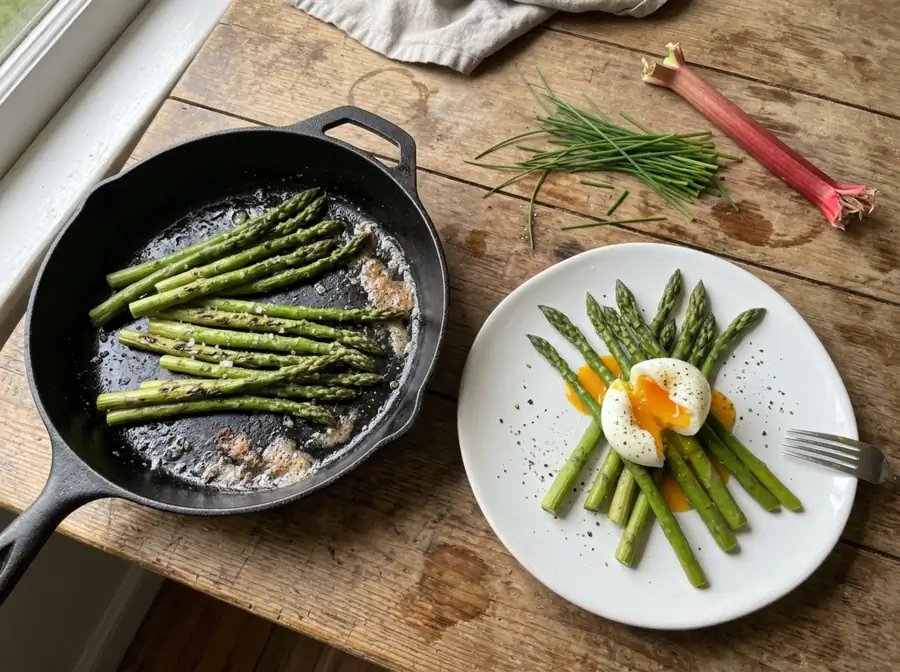
Asparagus blistered in butter in a cast-iron skillet, beside a plate of spears under a soft-boiled egg.AI-generated illustration

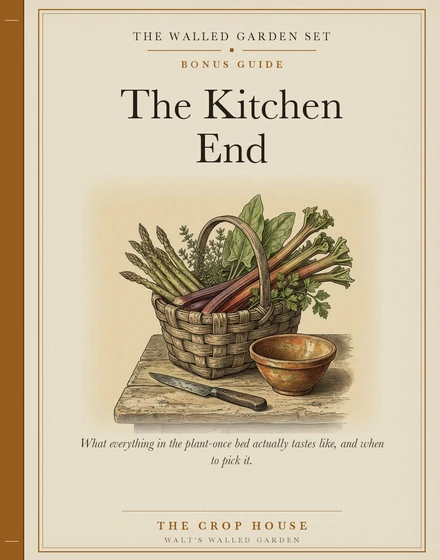
Asparagus, rhubarb, horseradish, walking onions, garlic, sorrel and chives each get a page: the honest flavor, the picking window, and two or three preparations that need butter, salt and a pan. Then the old-country four and the two in a box, including the two the guide calls acquired tastes.

  • 1–7Asparagus · Rhubarb · Horseradish · Walking onions · Garlic · Sorrel · Chivespp. 4–10
  • 8The Old-Country Fourp. 11
  • 9The Two in a Box · sunchoke and artichokep. 14

Bonus · The Potting-Shed Cards

7 printable cards. Every number in the set on single pages to print and pin up in the shed.

  • 1The Zone & Ground TableGuide 1
  • 2The Buying CalendarGuide 1
  • 3The Bean Test, Before Any Free LoadGuide 2
  • 4Rates & DepthsGuide 2
  • 5Seed: Save or Buy?Guide 3
  • 6The Ten-Seed TestGuide 3
  • 7Picking WindowsKitchen

The Walled Garden Set

$27One payment, no subscription. Price as of October 2026.
  • Guide One, The Plant-Once Bed: 14 perennials, the master table, 2026 sources and the buying calendar (28 pages)
  • Guide Two, The Bag You Never Buy: leaves, ash and compost at extension rates, and the bean test (19 pages)
  • Guide Three, The Seed You Keep: save, save with one rule, or buy; storage, viability, the law (15 pages)
  • Bonus, The Kitchen End: flavor, picking windows and plain preparations (15 pages)
  • Bonus, The Potting-Shed Cards: 7 printable cards with every number in the set
  • Every future edition, free to owners
Get the set, $27

Checkout on Gumroad. The download link appears as soon as you pay, and Gumroad emails it to you as well. Reply to your Gumroad receipt within 7 days for a full refund.

If you’re buying in the fall

Seed garlic and walking-onion topsets ship only in September and October, and the cardboard goes down before the leaves are gone. Asparagus and rhubarb crowns are ordered in January. That’s the nursery calendar from Guide One, not a sale.

Sold only as the set

There are no separate prices. The three guides and both bonuses come together in one download, for $27.

FAQ

Straight answers.

What exactly do I get?

Five PDFs: three guides and two bonuses, 86 pages in all, US Letter size, set in large type. They read on a tablet or computer and print cleanly. They open on a phone too, but full pages are small there. The Potting-Shed Cards are seven pages made to print and pin up.

Will these plants grow where I live?

That’s the first thing Guide One settles. It opens with three questions (your zone, your ground, your years) and a table that gives every plant an honest verdict, including “skip it.” Some plants won’t suit your ground, and the guide says so plainly.

Is this the same as the free videos?

No. The videos raised the questions; the guides answer them in tables, steps and calendars. The bean test wasn’t in any of the channel’s videos when the set was written, and Guide One reprices the video’s “$85 bed” at 2026 catalog prices.

Where do the numbers come from?

University extension services, the USDA, Seed Savers Exchange and the vendors’ own 2026 price pages, named in the text. Where only grower experience exists, the guide says exactly that.

Who is Walt?

Walt is the character who narrates The Crop House on YouTube. He is not a real person, and his pictures are AI-generated illustrations. He claims no credentials; the guides stand on their sources, not on him.

Is saving seed legal?

For open-pollinated and heirloom varieties you bought, yes. Guide Three’s Chapter 5 quotes the USDA’s own FAQ and explains hybrids, PVP-protected varieties and utility patents on one plain page. It isn’t legal advice.

What if prices or stock change?

They will. Every future edition is free to owners, and the buying calendar teaches the season logic that outlasts any single price.

How do I get it after I pay?

Checkout runs on Gumroad. The download link shows on screen right after payment, and Gumroad emails it to you too, so you can download it again later.

What if it isn’t for me?

Reply to your Gumroad receipt within 7 days for a full refund.
AI-generated illustration

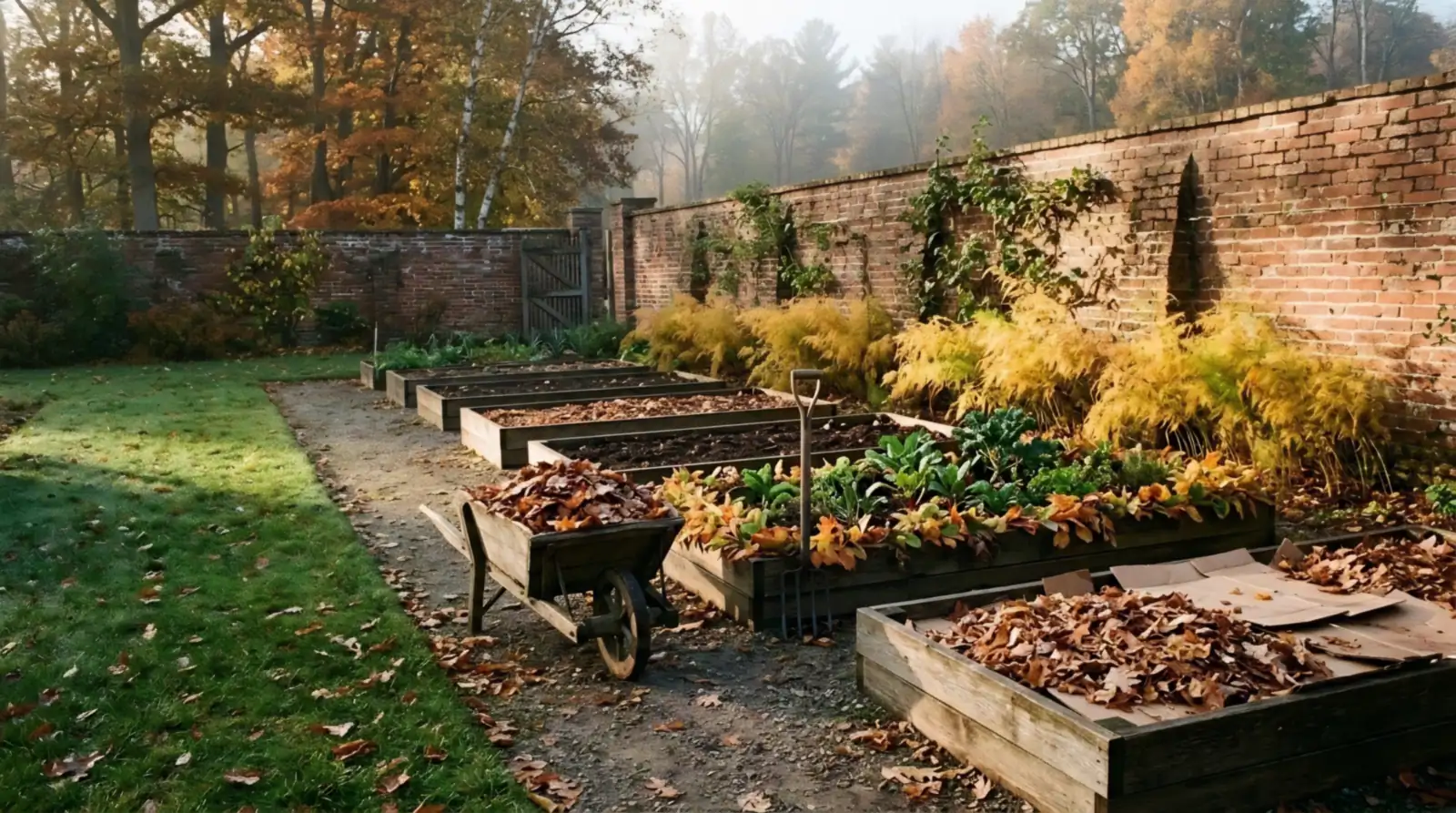
October is when the cardboard goes down.

Three guides, two bonuses, 86 pages, every number sourced. $27, once.

Get the set, $27
7-day refund, instant PDFs, yours to keep